



Loško polje karst field
Loška dolina is part of the classical karst, characterised by surface and underground karst formations. Loško polje, approximately 6 km long and 4 km wide, is a typical karst polje with a through-flow, across which the Obrh sinking stream meanders. During heavy and prolonged rainfall, the sinkholes cannot drain all the water, which begins to spill across the field and transform it into a lake. In addition to the annual floods, which are the reason settlements are built on the higher and peripheral parts of the field, extreme water levels are also well-known. The highest recorded level dates back to 1851. Take a stroll along the gentle field paths and stop in Dane, where an interpretive board about karst phenomena is set up as part of the Loška dolina Heritage Trail.

Golobina Cave
Golobina is a karst swallow-hole water cave near the village of Dane, into which the waters of the Obrh flow into the mysterious underground world during higher water levels. The water mostly drains into springs 2 km away on the south-eastern edge of Lake Cerknica, where it is renamed the Stržen and continues its journey across the fields of the Notranjska Lowlands, all the way to the Ljubljanica River.
The cave is diverse, spanning several levels, with tunnels forming a labyrinth. It is accessible to visitors for most of the year, but only when accompanied by licensed cave guides from the Križna cave Lovers’ Association.

Obrh Stream
Veliki Obrh originates in Vrhnika, at the foot of Racna gora, while Mali Obrh originates in Kozarišče, on the edge of the Snežnik forests. Both streams merge below the village of Pudob and, as a single watercourse, disappear into sinkholes and the Golobina swallow-hole cave near the village of Dane. The Obrh once had a significant impact on life in Loška dolina – water for household chores was carried from it to homes in buckets, women washed laundry in it, livestock drank from it, and the power of its water, often harnessed behind numerous dams, drove the wheels of mills and sawmills. It is now a protected water area, where the diverse animal community consists of indigenous species as well as newcomers, such as trout. The banks and waters of the Obrh are a habitat for endangered animal species – including the otter and the kingfisher.
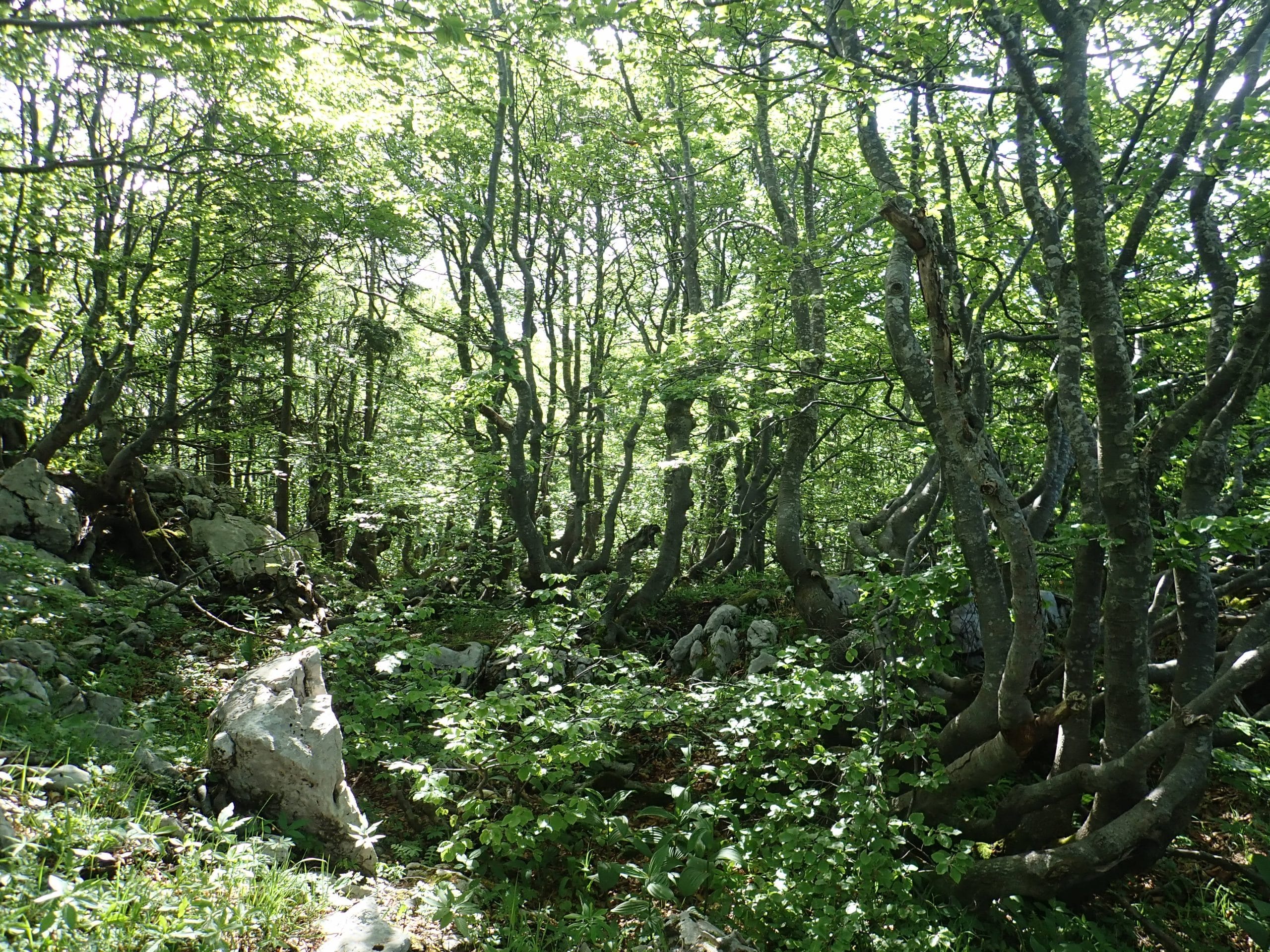
Ždrocle
The Snežnik-Ždrocle Nature Reserve has been inscribed on the UNESCO World Heritage List since 2017. It comprises ancient beech forests where, due to the proximity of the sea and the altitude of Snežnik, characteristic growing conditions have been established. Here, the beech forms the upper tree line and bears witness to the power of survival in the most extreme conditions, expressed through its almost ominous shapes. This is a truly pristine wilderness, with frost hollows, karst phenomena, and traces of former glaciers. Visits to the protected area are permitted only in exceptional cases.

Forest
The forests, covering more than four-fifths of the surface of the Municipality of Loška dolina, are an immense natural treasure that enchants all nature lovers with their majesty and primality. It is right here that we can venture into the most extensive Slovenian forest of the Snežnik–Javorniki plateau, which continues south into the forests of Gorski Kotar and meets the Kočevje forests to the east. Among the diverse forest types, mixed beech–fir forests predominate, while individual dendrological natural values also attract special attention. The forest is a habitat for many species, including endangered ones, so please respect ‘forest etiquette’ when walking through the woods.

Linden trees
The linden tree is associated with the symbol of life, health, and wisdom; it also serves as a ‘court tree’ and is linked to justice and laws. In the past, many important decisions for the community were often made right under the linden tree in the villages. Linden trees still grow in the villages of Loška dolina, which, according to their trunk circumference, are among the thickest in the Notranjska region. The most striking is certainly the linden tree in Koča vas, which is unparalleled in Loška dolina in terms of shape and size, followed closely by the linden tree with a stone heart by the Church of St. James in Pudob. Both are natural values of national importance. Take your time and sit under a linden tree. They say it has a very beneficial effect…

Snežnik Castle Park
The last owners of Snežnik Castle, members of the princely Schönburg-Waldenburg family, landscaped the estate in the immediate vicinity of the castle in the style of English landscape gardens at the end of the 19th and beginning of the 20th century, making it one of the most beautifully maintained in Carniola. Despite a somewhat neglected attitude towards the park in the past, we can still enjoy its rich natural landscape and cultural elements: tree-lined avenues and roundels, water features, some exotic plants, and the unique Snežnik garden rose, garden sculptures… The park, where you can wander freely, offers exceptionally authentic and ecologically powerful experiences throughout the year with its forest backdrop.

European Union Memorial Park
Upon Slovenia’s accession to the European Union, a park was established next to the primary school in Stari trg pri Ložu, in which representative trees of individual European EU member states are planted. A new tree is planted with the entry of each new member state. In addition to its educational role, the park has exceptional social significance, as its symbolic avenue of trees grows as a space for shared European values and coexistence.

Animals
All indigenous animal species contribute to maintaining the balance of the forest ecosystem. We are especially proud that large carnivores live here: the brown bear (Ursus arctos), the wolf (Canis lupus), and the lynx (Lynx lynx). Red deer and roe deer are common, and it is not unusual to spot a fox, squirrel, marten, badger… or traces of a wild boar. The dormouse, wild cat, capercaillie, and owls live much more hidden lives, including the Eurasian eagle-owl and the Ural owl. Tracking animals can be dangerous and, in some cases, prohibited, so always set out on your exploration accompanied by an authorised guide.

Dormouse (Glis glis)
The dormouse is a small rodent that prefers to inhabit deciduous and mixed forests. This excellent and agile climber sleeps through the day in holes or tree hollows and sets out to find food at night. It hibernates in underground tunnels, where several hundred can gather in colonies. It goes into hibernation with the first frosts and wakes up in April.
In the Notranjska region, dormouse hunting – known as ‘polhanje’ – has been present since the 13th century. Nowadays, hunting is permitted with special permits during the month of October. ‘Polhanje’ represents a tradition of the Notranjska rural population, while dormouse traps are a unique ethnological heritage presented in the Dormouse Museum in the outbuildings of Snežnik Castle. In the immediate vicinity, the ethnological and entertainment event ‘Polharska noč’ (Dormouse Night) takes place in September.

Owls
The Ural owl (Strix uralensis) is a common and widespread breeder throughout the Javorniki and Snežnik area, living in a labyrinth of beech and fir trees and reaching very high population densities. It is our second-largest owl. Incredibly sensitive eyes and hearing, along with silent flight, allow it to hunt the most timid rodents. Like all owls, it cannot move its eyes, but it has a much more flexible neck to compensate. The forest area is also important for three other species of owls: the Boreal owl (Aegolius funereus), the Eurasian pygmy owl (Glaucidium passerinum), and the Eurasian eagle-owl (Bubo bubo). Owls are a group of animals that are difficult to observe due to their nocturnal activity. We recommend contacting authorised guides or renting an observation hide for night-time viewing.