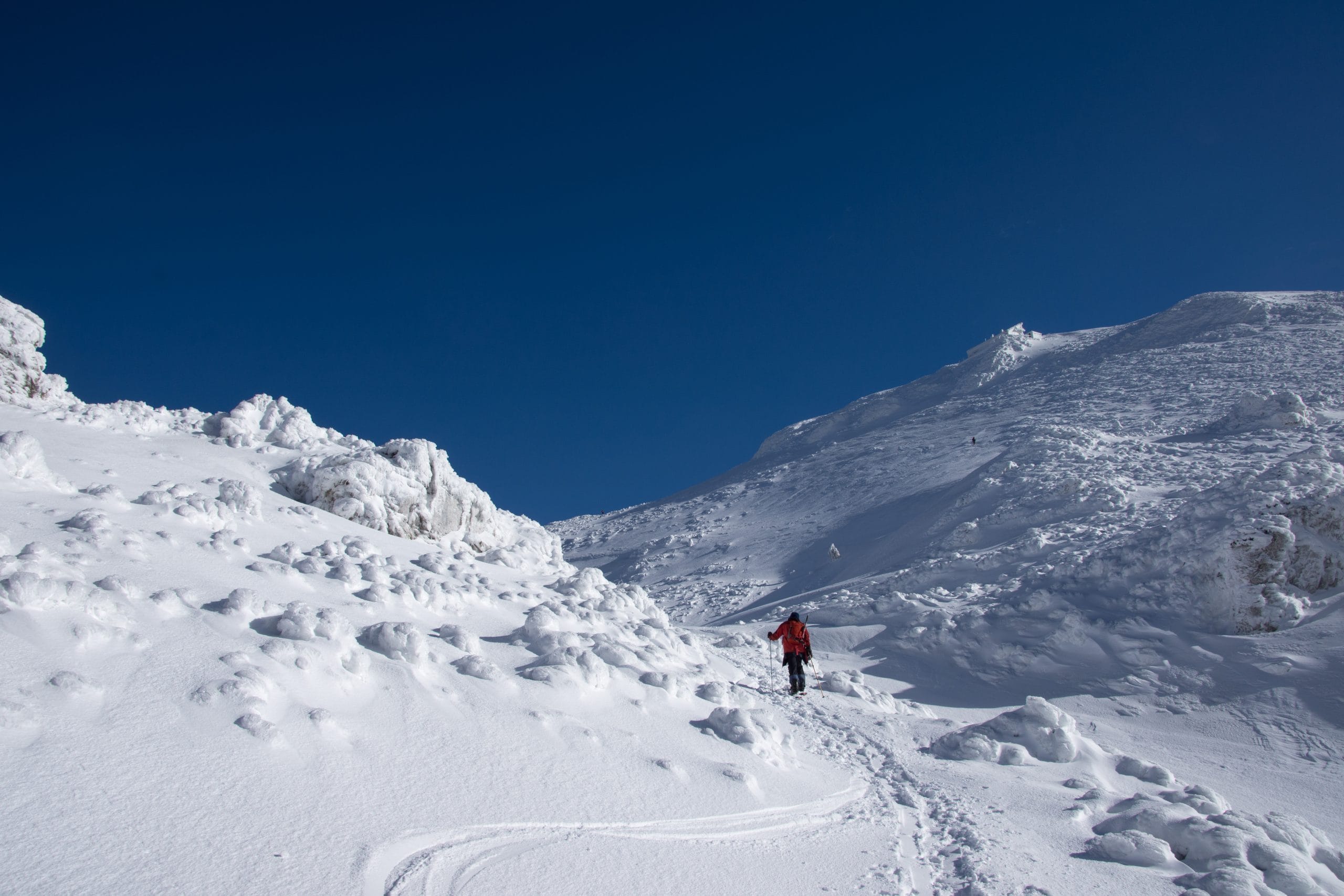

Mount Snežnik (1796 m)
Snežnik rises strikingly above all the hills of the Notranjska region, proclaiming its reputation as the highest mountain in the southern part of Slovenia. From its summit, the eye truly reaches into the vastness of the world. It also bears the names Notranjski and Veliki Snežnik; it was once known as Loški Snežnik, and in the last century, Loška dolina was referred to as the Snežnik Valley after it.
As a distinct barrier between the coastal areas and the interior, it intercepts large amounts of precipitation. In the Snežnik massif, there are many closed karst valleys and hollows where cold air settles in windless conditions, causing a characteristic temperature and vegetation inversion with an expressive name – a frost hollow. Long into spring, while the beech forests turn green further up, the snow-capped peak still glitters in the sun.
The paths to Snežnik are marked and highly attractive, as we discover traces of rare animal species, including the chamois and the brown bear, and marvel at the unusual flora that has long attracted the attention of botanists. During the last ice age, conditions here were favourable for the growth of alpine plants adapted to low temperatures; thus, the vegetation on Snežnik is a remnant (island) of alpine plants that retreated to higher parts of the Alps after the ice age. Due to its exceptional natural beauty and extremely rich flora, the summit of Snežnik was protected as a botanical reserve in 1964.
At the top, there is a mountain hut and a shelter where visitors can find refreshments and rest before returning to the valley. On its southern slope, one can still detect the remains of the walls of the first mountain hut on Slovenian territory, which was built by the Trieste branch of the German-Austrian Mountaineering Association in 1874.
Snežnik is a popular and not particularly demanding mountain peak that can be climbed from various directions: Sviščaki, Grda draga, Grčevec, and Gašperjev hrib.